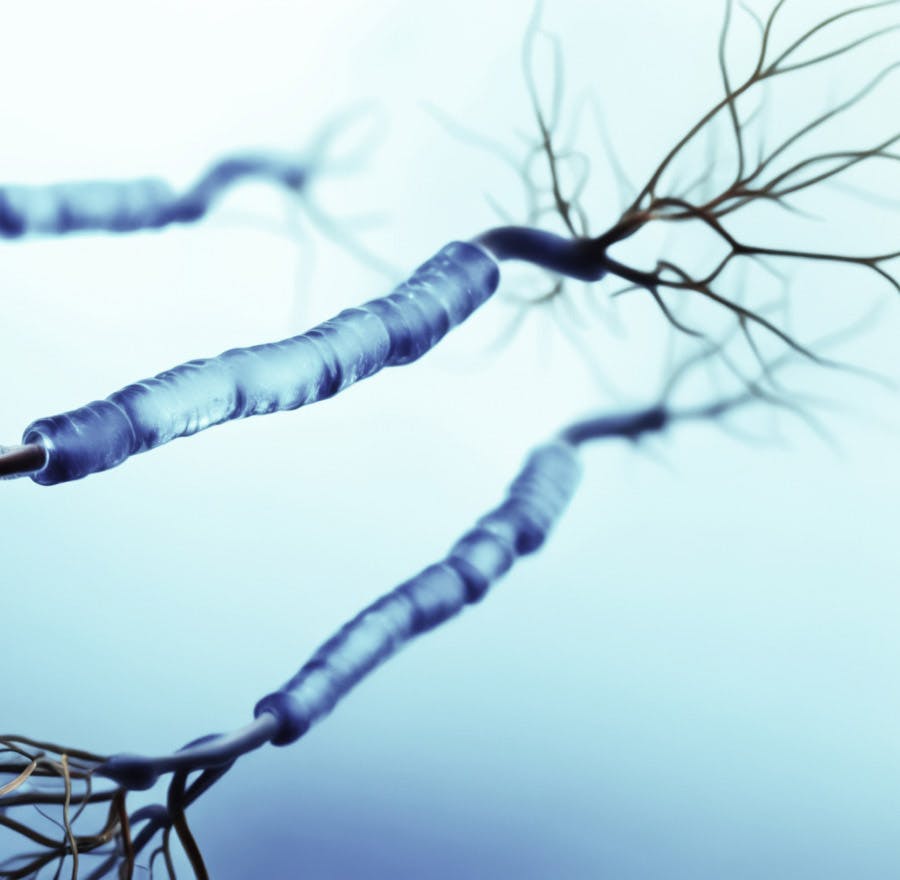
What Are Peripheral Nerve Tumors?

Peripheral nerve tumors develop on or around the nerves outside the brain and spinal cord. These tumors can be benign (non-cancerous) or malignant (cancerous) and may cause various symptoms. Common types of peripheral nerve tumors include schwannomas, neurofibromas, and malignant peripheral nerve sheath tumors.  An important distinction between schwannomas and neurofibromas is that schwannomas only arise from a single nerve fiber whereas neurofibromas involve many nerve fibers.  As such, neurofibroma resections may involve cutting out a small portion of the involved nerve and repairing this section with a sensory nerve from another part of the body, such as the foot.  Thus, trading numbness at the nerve donor site for muscle strength at the nerve recipient site. Peripheral nerve tumor surgery involves the surgical removal of these tumors to relieve symptoms, prevent further nerve damage, and improve function. The surgery aims to excise the tumor while preserving as much of the surrounding healthy nerve tissue as possible.

The Symptoms: What to Watch For

Peripheral nerve tumor surgeries address various symptoms that stem from untreated growths, including the following: 

  • Pain: Tumors pressing on nerves can cause significant pain, which can be constant, sharp, or shooting along the path of the affected nerve.
  • Numbness and Tingling: Nerve compression from tumors can lead to sensory disturbances like numbness, tingling, or “pins and needles” sensations in the affected area.
  • Muscle Weakness: If a tumor compresses or damages motor nerves, it can lead to weakness or loss of muscle function in the corresponding muscle groups.
  • Loss of Coordination or Balance: Tumors affecting nerves that control muscle movements can cause difficulties with coordination or balance.
  • Visible Lumps or Swelling: In some cases, tumors may be palpable or visible as lumps under the skin, which may cause cosmetic concerns or discomfort.
  • Functional Impairment: Depending on the location of the tumor, patients may experience limitations in movement, difficulty with daily activities, or specific functional impairments (e.g., difficulty gripping objects). 
woman smiling outside

What Is the Surgical Procedure?

Not all peripheral nerve sheet tumors require surgical intervention.  Some asymptomatic and small tumors may be monitored with annual imaging studies.  If surgery is needed, your peripheral nerve tumor surgery process starts with a comprehensive evaluation, including a physical examination and imaging studies (such as MRI or CT scans) to assess the tumor’s size, location, and impact on surrounding tissues. Peripheral nerve tumor surgery is performed under general anesthesia. The surgeon makes an incision to access the tumor, carefully removing it from the root while preserving the nerve’s function as much as possible.   A separate incision to obtain a donor nerve may be required if the tumor removal requires repair of the unhealthy nerve with a healthy donor sensory nerve.  After surgery, you will be monitored in a recovery area. Postoperative care includes managing pain, monitoring for complications, and beginning rehabilitation to support recovery and restore nerve function.


The Recovery: Regaining Your Strength

Recovery from surgery varies depending on the tumor’s size, location, and whether it involves nerve removal or repair. Generally, most patients can expect some initial discomfort, swelling, and temporary sensation or muscle strength changes around the surgical site. Mild activities can often be resumed within a few days, but full recovery, including regaining strength, sensation, and coordination, typically takes several weeks to a few months.

Physical therapy may be recommended to aid in rehabilitation. In cases where the tumor was benign and nerve damage was minimal, recovery is usually quicker and less complex. For more extensive surgeries or when malignant tumors are involved, the recovery process may be longer and involve additional treatments like radiation or chemotherapy. Regular follow-up appointments are essential to monitor healing and assess nerve function.

Choose Top-Tier Care with California Neurosurgical Institute

Choosing California Neurosurgical Institute for your peripheral nerve surgery ensures that you receive top-tier care with a meticulous approach from highly qualified experts. At California Neurosurgical Institute, every aspect of your treatment is handled with exceptional attention to detail, using the latest technology to provide optimal surgical outcomes. We recognize that every case is unique and deserves personalized care. Let us help.

closeup of brain nerves

Peripheral Nerve Tumors FAQ's

What are peripheral nerve tumors?

Peripheral nerve tumors are growths that develop on or around nerves outside the brain and spinal cord. They may be benign or malignant. Common types include schwannomas, neurofibromas, and malignant peripheral nerve sheath tumors.

What symptoms can peripheral nerve tumors cause?

Peripheral nerve tumors can cause pain, numbness, tingling, muscle weakness, loss of coordination or balance, visible lumps or swelling, and functional limitations depending on the location and effect of the tumor on surrounding nerves.

Do all peripheral nerve tumors require surgery?

No. Some small, asymptomatic peripheral nerve tumors may be monitored with regular imaging rather than treated surgically. Surgery may be recommended when a tumor causes symptoms, threatens nerve function, grows, or requires treatment based on its characteristics.

How are peripheral nerve tumors diagnosed?

Diagnosis typically begins with a comprehensive evaluation that includes a physical examination and imaging studies such as MRI or CT scans. These assessments help determine the tumor's size, location, and impact on surrounding nerves and tissues.

What happens during peripheral nerve tumor surgery?

Peripheral nerve tumor surgery is performed under general anesthesia. The surgeon makes an incision to access the tumor and carefully removes it while preserving as much healthy nerve tissue and function as possible. In some cases, nerve repair may be necessary after tumor removal.

What is the difference between a schwannoma and a neurofibroma?

A schwannoma typically arises from a single nerve fiber, while a neurofibroma can involve multiple nerve fibers. Because of this difference, removing a neurofibroma may sometimes require removal of a portion of the involved nerve and reconstruction using a healthy sensory nerve from another part of the body.

Will my nerve need to be repaired after peripheral nerve tumor removal?

In some cases, nerve repair may be necessary if tumor removal requires removing a portion of an affected nerve. A healthy sensory nerve from another part of the body, such as the foot, may be used to repair the damaged section. Your surgeon will determine the appropriate approach based on the tumor and affected nerve.

What should I expect during recovery after peripheral nerve tumor surgery?

Recovery varies depending on the tumor's size and location and whether nerve removal or repair was required. Some initial discomfort, swelling, and temporary changes in sensation or muscle strength may occur. Mild activities can often resume within a few days, while full recovery may take several weeks to a few months.

Will I need physical therapy after peripheral nerve tumor surgery?

Physical therapy may be recommended to support rehabilitation and help restore strength, sensation, coordination, and function. The extent of therapy depends on the complexity of the surgery and the impact of the tumor on the affected nerve.

Will I need additional treatment after peripheral nerve tumor surgery?

Additional treatment depends on the type and characteristics of the tumor. Patients with benign tumors and minimal nerve damage may have a simpler recovery, while malignant tumors or more extensive surgery may require additional treatments such as radiation or chemotherapy. Regular follow-up appointments are important for monitoring healing and nerve function.

Contact us media
Contact us media
Accessibility: If you are vision-impaired or have some other impairment covered by the Americans with Disabilities Act or a similar law, and you wish to discuss potential accommodations related to using this website, please contact our Accessibility Manager at (661) 799-2542.
Contact Us